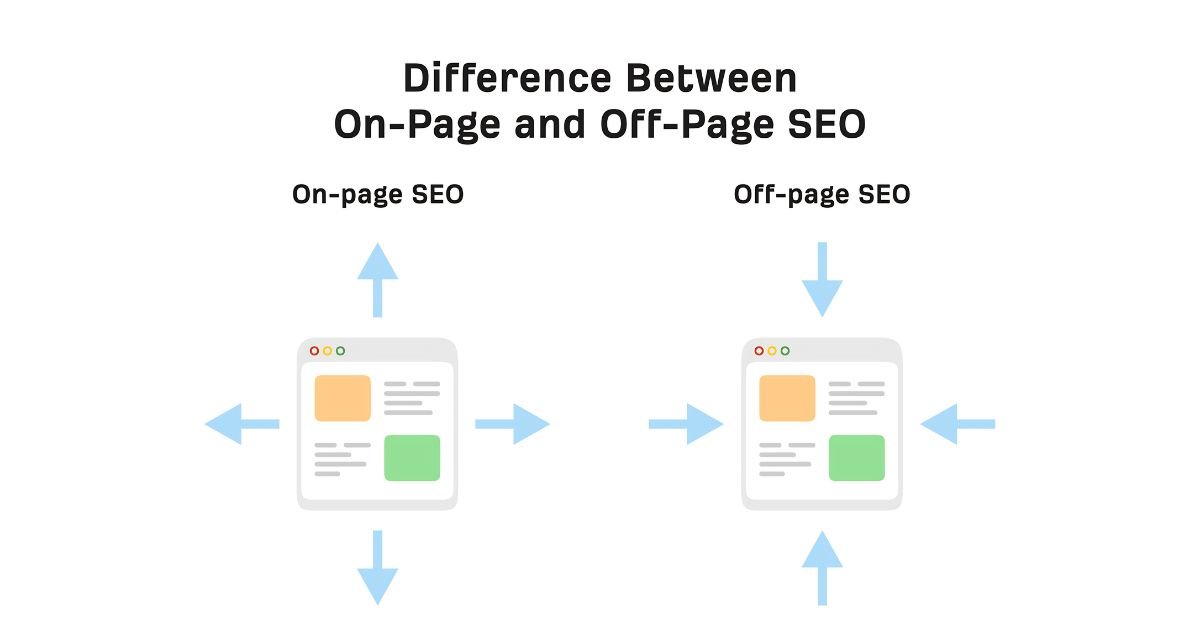
What’s the difference between on-page SEO and off-page SEO?
Search Engine Optimization (SEO) is one of the most effective ways to improve your website’s visibility on search engines. A strong SEO strategy helps businesses attract organic traffic, reach potential customers, and build a stronger online presence.
SEO mainly consists of two important parts: On-Page SEO and Off-Page SEO. Both strategies help improve search rankings, but they focus on different areas.
Understanding the difference between On-Page SEO and Off-Page SEO helps businesses create a complete and effective SEO strategy.
What is On-Page SEO?
On-Page SEO refers to all optimization activities performed directly on a website to improve its search engine ranking and user experience.
It focuses on improving website content, page structure, and technical elements that help search engines understand and rank web pages.
Key Elements of On-Page SEO
1. Keyword Optimization
Keyword optimization involves using relevant search terms naturally throughout website content. Proper keyword placement helps search engines understand the topic of your pages and improves visibility for relevant searches.
2. High-Quality Content
Creating valuable, informative, and original content helps answer user questions and keeps visitors engaged. Search engines prefer websites that provide useful information and a better user experience.
3. Title Tags and Meta Descriptions
Optimized page titles and meta descriptions help search engines understand your content and encourage users to click your website in search results.
4. Internal Linking
Internal links connect different pages of your website and help search engines discover your content. They also improve website navigation for visitors.
5. Website Speed and Mobile Optimization
A fast and mobile-friendly website improves user experience and supports better search engine performance.
What is Off-Page SEO?
Off-Page SEO includes activities performed outside your website to improve website authority, credibility, and online reputation.
While On-Page SEO focuses on improving your website, Off-Page SEO focuses on building trust signals from external sources.
Key Elements of Off-Page SEO
1. Backlink Building
Backlinks from trusted and relevant websites act as recommendations for your website. Quality backlinks can improve website authority and search engine visibility.
2. Social Media Marketing
Sharing website content on social media platforms helps increase brand awareness, attract visitors, and improve online engagement.
3. Online Reviews and Reputation
Positive customer reviews and brand mentions help build trust with users and improve local search visibility.
4. Guest Posting
Publishing valuable content on industry-related websites helps generate quality backlinks and increases brand exposure.
5. Local SEO Activities
Optimizing business listings, local directories, and location-based information helps businesses improve visibility in local searches.
On-Page SEO vs Off-Page SEO: Key Differences
| On-Page SEO | Off-Page SEO |
|---|---|
| Optimization is done on your website | Activities are performed outside your website |
| Focuses on content, keywords, and website structure | Focuses on backlinks, authority, and reputation |
| Improves website quality and user experience | Builds trust and online credibility |
| Includes technical improvements and internal linking | Includes external promotions and brand mentions |
Which is More Important: On-Page SEO or Off-Page SEO?
Both On-Page SEO and Off-Page SEO are important for achieving long-term search engine success.
On-Page SEO creates a strong foundation by improving website quality and content, while Off-Page SEO increases website authority and trust.
A successful SEO strategy combines both approaches to improve rankings, attract targeted visitors, and grow online visibility.
How Professional SEO Services Help Businesses
Professional SEO services help businesses improve their online presence through strategic optimization techniques.
SEO experts analyze websites, identify improvement areas, optimize content, improve technical performance, and create strategies to increase organic traffic.
A well-planned SEO approach helps businesses connect with the right audience and achieve sustainable digital growth.
Conclusion
On-Page SEO and Off-Page SEO are two essential parts of a complete SEO strategy. On-Page SEO improves elements within your website, while Off-Page SEO builds authority and reputation outside your website.
By implementing both strategies together, businesses can improve search visibility, attract quality traffic, and create a stronger online presence.